Imagine asking ChatGPT, Gemini, or another AI assistant, "Which companies offer the best AI-powered customer engagement solutions?" Within seconds, it generates a concise answer, highlighting a handful of businesses and citing information from trusted websites. Now consider this: would your website be one of those trusted sources? For many businesses, the answer is no. An AI-citable page is designed so AI systems can easily understand, validate and reference its content - and it is built on three core elements: structure, schema and signals.
Why AI-Citable Pages Matter Now
Organisations have spent years optimising for traditional search engines - targeting keywords, building backlinks, and improving rankings. But search is evolving. AI-powered search engines don't just index webpages; they interpret, compare, summarise, and recommend information.
If your content isn't structured for AI, even valuable insights may never appear in AI-generated responses. This is where an AI-citable page becomes essential: a page built so AI can understand it, trust it, and reference it with confidence.
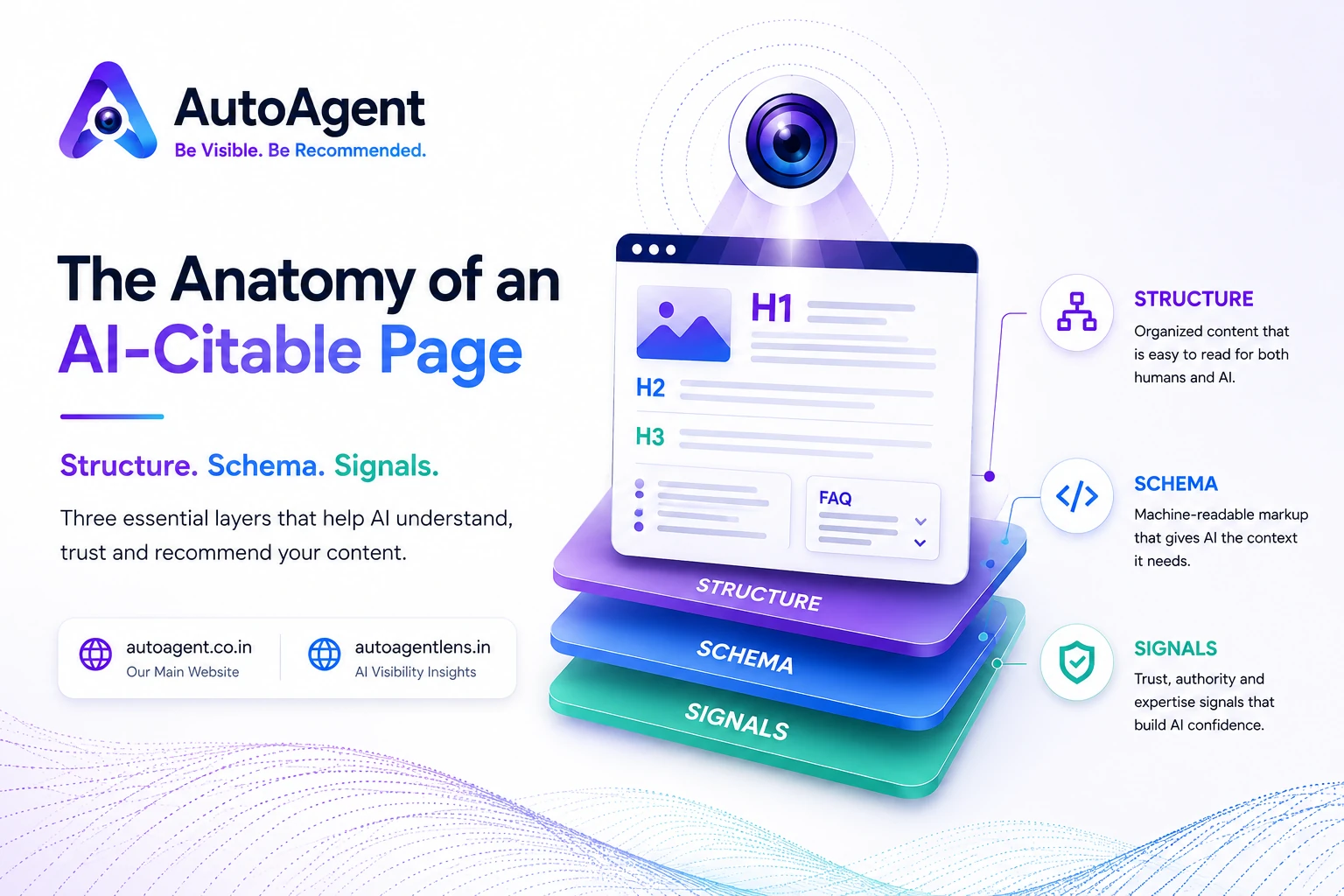
AI does not reward the loudest page. It rewards the clearest, most verifiable one.
Structure: Organise Content for Both Humans and AI
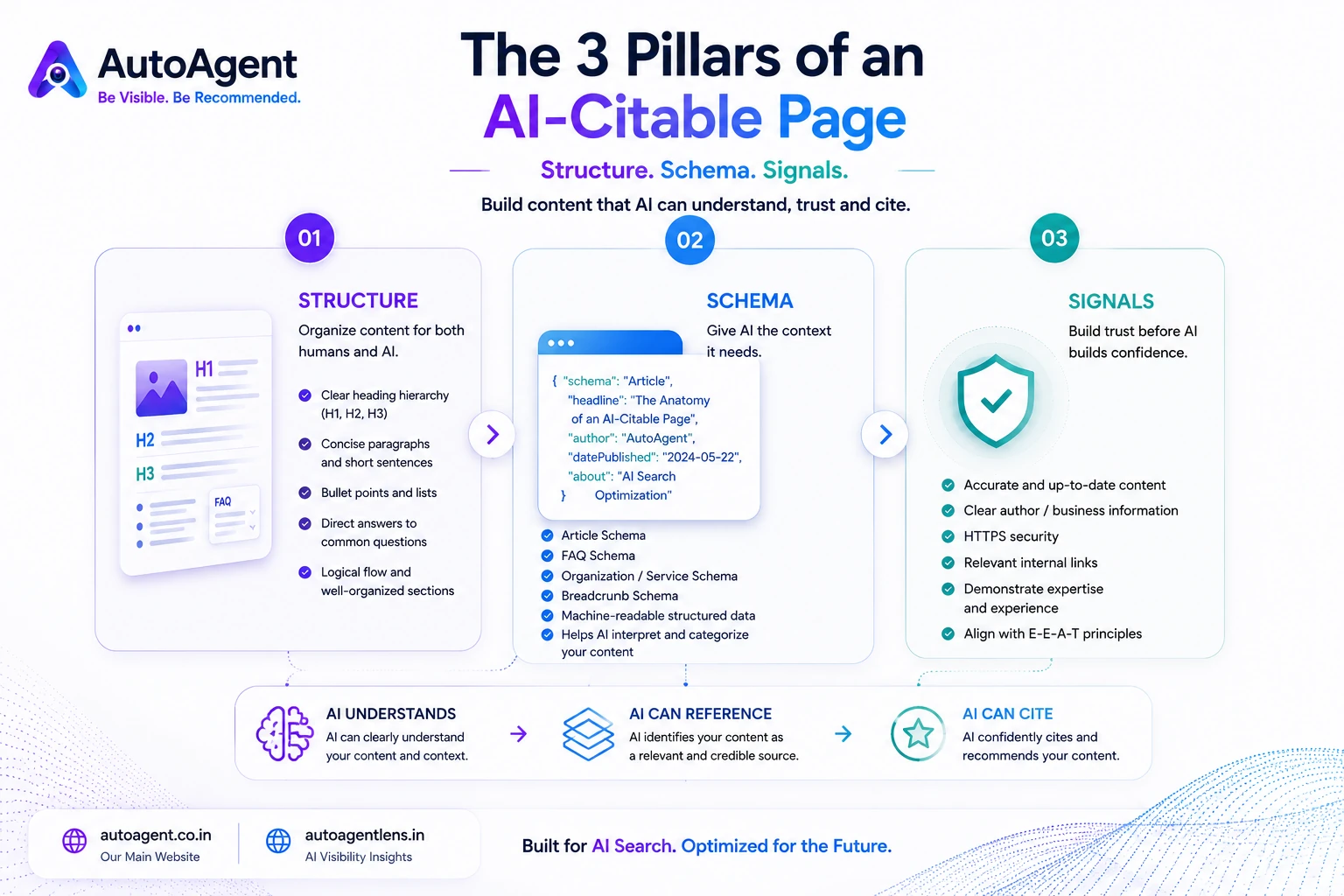
AI models perform best when information follows a logical structure. Use a clear heading hierarchy (H1, H2, H3), concise paragraphs, descriptive subheadings, bullet points, and direct answers to common questions. Each section should focus on a single topic, making it easier for AI to identify key concepts and relationships.
- Clear heading hierarchy (H1, H2, H3)
- Concise paragraphs and short sentences
- Bullet points and scannable lists
- Direct answers to common questions
- Logical flow with well-organised sections
Well-structured content not only improves readability but also increases the chances of your information being extracted and cited in AI-generated responses.
Schema: Give AI the Context It Needs
Schema markup acts as a translator between your website and AI systems. It provides machine-readable information that explains what your content represents rather than leaving AI to infer it.
- Article schema for editorial and blog content
- FAQ schema for question-and-answer blocks
- Organisation and Service schema for business context
- Breadcrumb schema for site hierarchy
While schema doesn't guarantee citations, it significantly improves content interpretation and strengthens your AI search optimisation strategy.
Signals: Build Trust Before AI Builds Confidence
AI prioritises content from credible and authoritative sources. To improve trust, ensure your website includes accurate and updated information, clear author or business details, HTTPS security, relevant internal links, and content that demonstrates real expertise.
- Accurate and up-to-date content
- Clear author and business information
- HTTPS security across the site
- Relevant internal links between related pages
- Demonstrated expertise and first-hand experience
- Alignment with E-E-A-T principles
These trust signals align with Google's E-E-A-T principles and help position your website as a reliable source that AI can confidently reference.
The Solution: Build AI-Ready Content, Not Just SEO-Ready Content
Many businesses assume publishing more blogs will improve visibility. In reality, success in AI search depends on how content is structured, connected, and presented.
- 1Audit existing pages and identify outdated or thin content.
- 2Improve page structure with a clean heading hierarchy and direct answers.
- 3Implement relevant schema markup across templates, not just one-off pages.
- 4Answer user intent directly at the top of each section.
- 5Create meaningful internal links between related pages and entities.
- 6Focus on solving real user problems instead of targeting keywords alone.
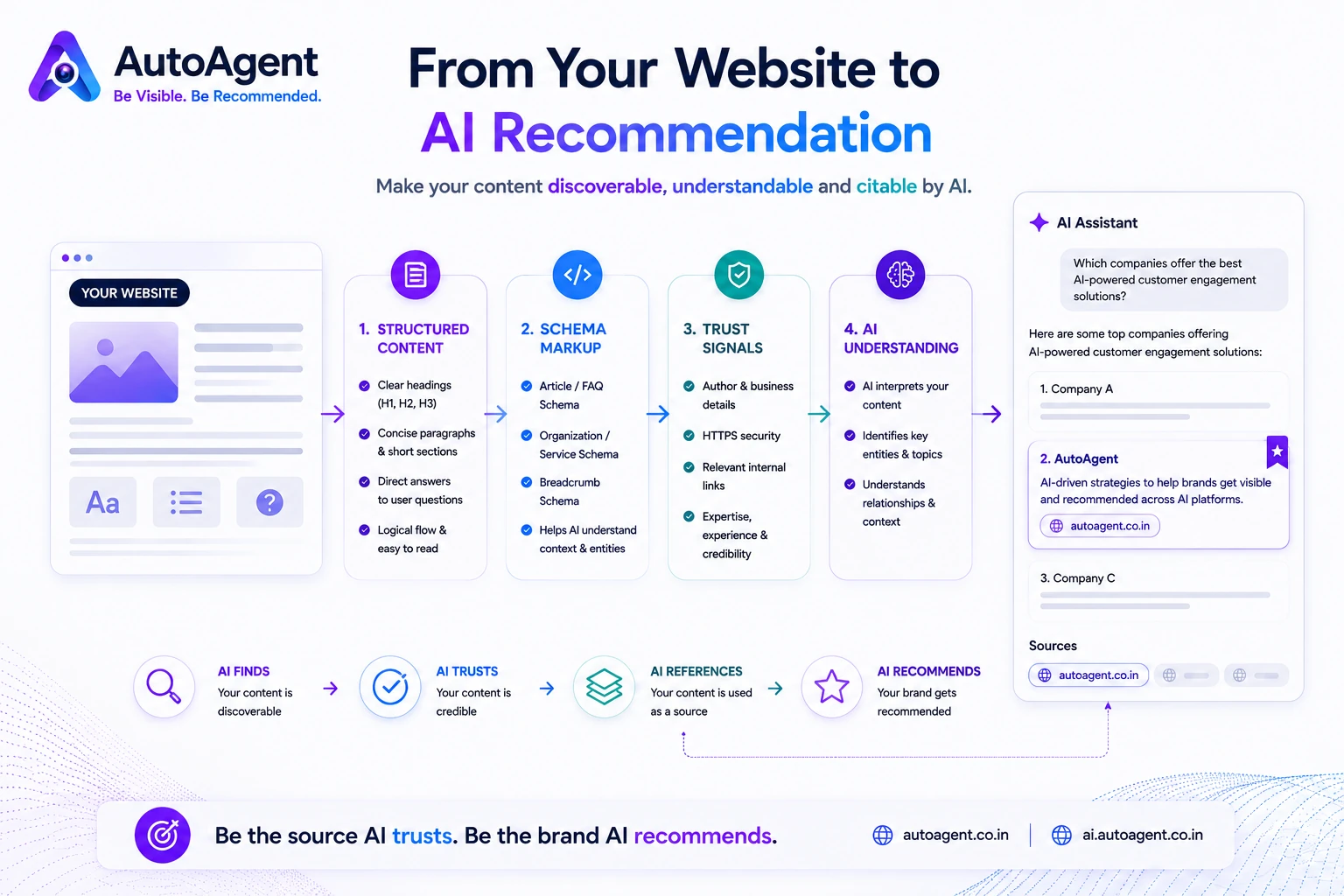
An AI-ready website combines technical SEO with structured content and semantic relevance, making it easier for both search engines and AI assistants to understand your expertise.
At AutoAgent, we help businesses prepare for this shift by optimising websites for AI-powered discovery - from content structuring and schema implementation to technical SEO and AI search optimisation.
Conclusion
The future of digital visibility isn't only about ranking first; it's about becoming a trusted source that AI chooses to reference. Businesses that invest in structured, AI-ready content today will have a competitive advantage as AI-powered search becomes the primary way users discover information.
If your website isn't built to be AI-citable, you're not just missing traffic - you could be missing the conversations where your next customers are making decisions.
Frequently Asked Questions
Vaishnavi Nichal is a content strategist at AutoAgent. She develops content about technical SEO, website structure, and AI search visibility.
Ready to get cited by AI?
Get a free GEO audit of your website and a personalized roadmap to AI visibility.
Book a Strategy Call